
Cosmo casino Plinko game
Introduction
I look at a lot of casino titles that promise instant excitement, but Plinko stands out for a different reason. On the surface, it is almost disarmingly simple: you drop a ball from the top of a board, it bounces through a field of pins, and it lands in a prize slot with a set multiplier. That is the whole idea. Yet in practice, Cosmo casino Plinko can create a very specific kind of tension that many classic slots do not deliver.
What makes this format worth serious attention is the gap between its visual simplicity and its real session dynamics. There are no reels, no paylines, no bonus rounds to decode. Instead, the entire experience revolves around trajectory, probability distribution, stake control, and the level of risk selected before each drop. For some players, that makes Plinko easier to understand than a video slot. For others, it becomes more deceptive, because the rules are clear but the outcomes can still swing sharply.
In this article, I will break down how Plinko works at Cosmo casino, why it attracts so much attention, what the risk settings actually change, and what a player should realistically expect before starting a session. My goal is not to oversell the format, but to explain what this title offers in practical terms and where caution matters.
What Plinko is and why it attracts so much attention
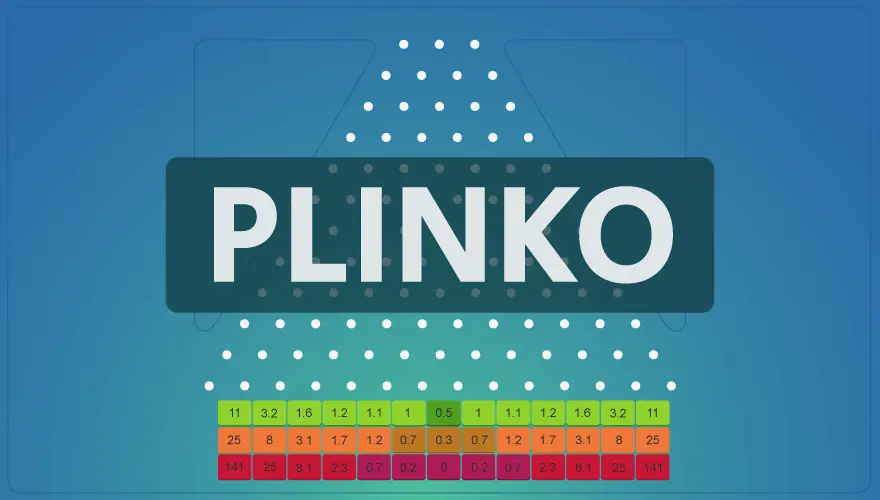
Plinko is a chance-based casino game built around a falling ball and a pegged board. The player chooses a stake, often selects a risk level, and then releases the ball from the top. As it hits pins on the way down, it moves left or right in a sequence of random deflections until it reaches one of the multiplier slots at the bottom.
The concept is easy to grasp within seconds. That matters. Many casino players are used to interfaces packed with symbols, side features, and layered rules. Plinko removes nearly all of that. It presents randomness in a visible form. You are not watching hidden reel math behind animated icons; you are watching a path unfold in front of you.
This visibility is one of the main reasons the format became so noticeable. The game gives immediate feedback. Every drop feels self-contained. The result is not buried in a long spin cycle or delayed by feature sequences. The anticipation builds in a straight line: release, bounce, drift, land.
There is another reason for its appeal. Plinko creates the impression that every result was “almost” something else. A ball that lands in a modest multiplier may have passed close to a much larger one. That near-miss feeling is powerful. It is not unique to Plinko, but here it is unusually visible, and that visibility changes how players emotionally read the outcome.
One of my clearest observations is this: Plinko often feels more personal than a slot even though the result is still random. Because you watch the ball move through the board, the outcome appears to develop rather than simply appear. That subtle difference is part of the game’s pull.
How the Plinko board works in real play
At Cosmo casino, the core structure of Plinko follows the familiar model used across this category. A ball starts at the top of the board and falls through rows of pins. Every collision redirects it slightly left or right. By the time it reaches the bottom, the final landing position determines the payout multiplier applied to the stake.
The board is usually designed around a probability curve. In practical terms, this means central slots are hit more often than the extreme outer slots. Those central positions tend to carry lower multipliers, while the far edges usually hold the highest potential returns. This is not accidental. It is the mathematical backbone of the title.
That structure leads to an important player takeaway: the biggest multipliers are not just “hard to hit” in a vague sense. They are placed in the least likely landing zones by design. So when a Plinko interface displays an eye-catching top multiplier, that number should never be read as a common or even occasional baseline result. It is an outlier outcome.
Below is a simplified view of how the board logic translates into practical expectations.
| Board area | Typical hit frequency | Usual multiplier profile | What it means in practice |
|---|---|---|---|
| Centre slots | Highest | Low | More frequent landings, smaller returns, steadier session flow |
| Near-centre slots | Moderate | Low to mid | Can soften losses but rarely define the session |
| Outer slots | Low | High | Rare outcomes that can reshape results quickly |
| Extreme edges | Very low | Top-end | Headline multipliers, but statistically exceptional rather than routine |
For players new to the format, this board distribution is the first thing to understand. Plinko is not about “aiming” the ball in any meaningful skill-based way. The suspense comes from watching a random path interact with a probability map that heavily favours some zones over others.
Risk levels, ball movement, and session dynamics
Risk settings are where Plinko stops being merely simple and starts becoming strategically distinct. In many versions, including the kind of setup players expect at Cosmo casino, you can choose between lower, medium, and higher risk profiles. This setting changes the multiplier distribution across the board.
With a lower-risk setup, the bottom row is usually flatter. There are fewer dramatic gaps between weak and strong outcomes. You are more likely to see modest results and less likely to encounter extreme swings. The session can still go badly, of course, but the path tends to feel smoother.
With a higher-risk setup, the board becomes more uneven. Low multipliers dominate much of the layout, while a small number of slots offer much larger upside. This changes the emotional rhythm immediately. Instead of a relatively even stream of middling landings, you get longer stretches of underwhelming returns punctuated by the possibility of a sharp spike.
That is the point many players underestimate. The risk selector is not a cosmetic option. It changes the entire feel of the session. Two people can both say they played Plinko, yet one may have experienced a calm, repetitive grind while the other sat through an aggressive sequence of misses and sudden jumps.
In practical terms, the risk level affects four things at once:
Session stability. Lower settings generally produce less violent bankroll movement.
Psychological pressure. Higher settings create more tension because the board offers fewer useful landing zones.
Hit perception. A “good” result looks different depending on the chosen profile.
Bankroll durability. Sharp variance can exhaust a balance faster than the clean interface suggests.
Here is a second observation that often gets missed: Plinko can feel slow and fast at the same time. Each individual round resolves quickly, but the meaning of the session may take time to emerge. A dozen drops can pass in seconds, yet the actual pattern of returns may only become clear after a longer run. That combination is one reason the format can pull players into extended sessions.
Why the game feels engaging even without reels or bonus rounds
Traditional slots rely on layered stimulation: spinning reels, symbol combinations, feature teases, free spins, expanding elements, and sound design that constantly signals possibility. Plinko strips most of that away, but it does not become dull by default. It replaces feature complexity with outcome visibility.
The interest comes from anticipation compressed into a few seconds. Once the ball is released, every bounce creates a tiny update to the player’s expectation. A path can start centrally, drift outward, then snap back. That movement is enough to generate suspense without needing a conventional bonus structure.
There is also a rhythm advantage here. In many slots, dead spins can feel empty because nothing visible develops beyond symbol stops. In Plinko, even a weak result has a visible route. The player sees the process, not just the conclusion. That does not improve the odds, but it does change the texture of the experience. Anyone stuck on account verification can follow the steps laid out in best Cosmo Casino roulette.
At the same time, this is exactly where caution is needed. Because each drop is short and visually active, the game can encourage rapid repetition. It is easy to think in units of “just one more ball” rather than in terms of total stake exposure across a session. On a fast cycle, that matters a lot.
How risky Plinko really is and who it suits best
Plinko is often described as straightforward, and that description is accurate only at the rules level. Financially, the format can be much less straightforward. The actual risk depends heavily on stake size, risk mode, and how many drops a player makes in a short period.
If I had to summarise the danger in one sentence, it would be this: Plinko compresses variance into a very clean interface. Because the board is uncluttered and the controls are simple, players may underestimate how quickly a balance can move, especially on higher-risk settings.
For that reason, Plinko tends to suit players who enjoy short-form probability play and can stay disciplined with pacing. It often works well for users who like direct outcomes, do not need elaborate bonus systems, and are comfortable with the idea that long stretches of small returns may be part of the experience.
It may be less suitable for players who prefer longer narrative sessions, feature hunting, or a feeling of progression. If someone enjoys unlocking rounds, collecting symbols, or building toward a bonus state, Plinko can feel too bare. The title gives you immediacy, not development.
It can also frustrate players who react strongly to streaks. Higher-risk Plinko is particularly unforgiving in this regard. The board can deliver repeated low multipliers while still technically behaving exactly as designed. That is not a glitch or a cold patch in any meaningful sense. It is the expected behaviour of a skewed distribution.
What players should understand about probabilities and outcomes
One of the most important things to understand before launching Cosmo casino Plinko is that visible randomness is still randomness. Watching the ball bounce does not make the result more controllable. The path may look interpretable, but the outcome remains governed by chance.
Players should also separate three ideas that are often blended together:
Hit frequency — how often the ball lands in certain zones.
Multiplier size — how large the return is when a stronger slot is reached. Table game fans will get more out of this review after reading Cosmo Casino Android app overview for players.
Session profitability — whether the total sequence of results actually leaves the player ahead.
These are not the same thing. A session can contain many “successful” landings in the sense that the ball constantly reaches paying slots, yet still perform poorly overall if the multipliers are too small relative to the stake pattern and loss rate. This is another place where Plinko’s clarity can be misleading. Because almost every drop ends in a visible multiplier, the flow can feel more rewarding than the balance movement really is.
That is my third memorable observation: Plinko often produces more visual reassurance than mathematical comfort. The board keeps giving you outcomes, but not all outcomes are equally useful.
It is also worth noting that the top-end multipliers play a major psychological role in the format. They attract attention, shape expectations, and create the sense that a single drop could transform the session. That is true in theory. In reality, those outcomes sit at the edge of the distribution and should be treated as rare events, not as a realistic target for routine play.
How Plinko compares with slots and other casino formats
Compared with classic slots, Plinko is more transparent in presentation but narrower in structure. A slot can hide enormous complexity under a simple interface: paylines, cluster systems, wild substitutions, bonus triggers, reel weighting, and layered RTP behaviour across features. Plinko is more exposed. You can see the board, the multipliers, and the result path in one frame.
That transparency makes the game easier to read, but it also means there is less variety per round. If a player values changing symbol sets, themed presentation, and bonus diversity, slots usually offer more. If the player values directness and fast outcome feedback, Plinko often feels cleaner.
Against table-style options such as roulette, Plinko sits somewhere in between. It shares roulette’s attraction to probability distribution and quick rounds, but it adds a visual descent that makes each result feel more animated. Against crash games overview, Plinko is less about timing decisions and more about accepting a pre-set distribution. Against blackjack, it removes decision-making almost entirely.
| Format | Main appeal | Player control | Session feel | Typical reason to choose it |
|---|---|---|---|---|
| Plinko | Visible randomness and fast drops | Low | Quick, tense, repetitive | Direct probability-based play |
| Classic slots | Reels, themes, bonus layers | Low | Variable, feature-driven | Entertainment variety and bonus chasing |
| Roulette | Clear odds structure | Moderate via bet selection | Clean and cyclical | Traditional probability betting |
| Blackjack | Decision-based play | Higher | Measured and interactive | Skill-influenced sessions |
The practical conclusion is simple: Plinko is not a replacement for every casino format. It fills a specific niche. It works best when a player wants a short-cycle, visually readable, high-attention experience without learning a complicated ruleset.
Practical advantages and limitations of the format
Plinko has several genuine strengths. First, it is accessible. A new player can understand the structure almost immediately. Second, it gives fast feedback. Third, the risk setting often allows some control over session character, even if not over individual outcomes. Fourth, it is unusually transparent in how it presents the relationship between likely and unlikely landing zones.
But those strengths come with limitations that should not be ignored. The simplicity that makes Plinko approachable can also make it repetitive. Without features, progression, or strategic layers, the session depends heavily on whether the player enjoys pure distribution-based suspense. If that core loop does not appeal, the format can wear thin quickly.
There is also a practical bankroll issue. Because rounds resolve so quickly, stake accumulation can outpace player awareness. This is especially relevant when using auto-play style repetition or when increasing stakes after a poor run. The board does not look aggressive, but the session can become expensive faster than a player expects.
On higher-risk settings, another limitation appears: emotional volatility. Repeated small outcomes can create the false sense that a larger hit is somehow due. It is important to resist that thinking. Each drop is independent within the game’s probability model. Chasing a perceived correction is one of the easiest ways to turn a controlled session into a costly one.
What to check before starting a session at Cosmo casino
Before playing Cosmo casino Plinko, I would focus on a few practical checks rather than jumping straight into repeated drops.
Review the risk mode first. Do not treat low, medium, and high as minor flavour options. They define the shape of the session.
Set a stake that matches the speed of the game. A comfortable stake in a slower slot may feel too high in a rapid Plinko cycle.
Use demo play if available. This is one of the few titles where a short test can genuinely help you understand the rhythm before real-money play.
Decide what result you are looking for. If you want steadier entertainment, aggressive settings may work against you.
Watch the balance, not just the board. The animation can keep attention on the path while the bankroll tells the more important story. The full picture of payment methods lives in current Cosmo Casino blackjack information for online casino players, including the less common ones.
That final point is especially important. Plinko is very good at keeping the eyes busy. A disciplined player keeps part of their attention on the numbers behind the spectacle. Mobile players should have a look at Cosmo Casino games guide before choosing a real money casino before installing anything.
Final verdict on Cosmo casino Plinko
Cosmo casino Plinko offers a focused, probability-driven experience that is easy to enter and harder to judge correctly at first glance. Its strongest quality is clarity. You can understand the structure quickly, follow every result visually, and choose a risk profile that changes the tone of the session in a meaningful way. For players who enjoy direct outcomes, quick rounds, and visible randomness, that can be highly appealing.
The game’s main caution point is equally clear. Simplicity does not mean softness. Depending on the selected risk level, Plinko can produce sharp balance swings, long stretches of weak returns, and a pace that encourages more drops than a player originally planned. The top multipliers are exciting, but they should be seen as rare possibilities rather than practical expectations.
In my view, Plinko works best for players who appreciate clean design, fast feedback, and a more stripped-back form of casino tension. It is less suited to those who want layered bonus systems, strategic depth, or a slower sense of progression. That is why the format divides opinion so clearly: one group sees elegant immediacy, the other sees repetition and harsh variance.
So, is Cosmo casino Plinko worth trying? Yes, if you want a game that turns probability into something visible and immediate. Just go in with the right expectations. The board looks simple, but the session can be far more demanding than the interface suggests. For a closer look at the games library, Aviator crash game overview sorts the titles by theme and pace.
FAQ
How does the Plinko ball-drop work on the official casino site?
A ball is released and bounces through the pegs before landing in a numbered slot. The slot it lands on determines the multiplier for that round.
What should be checked if a round outcome feels different from the last session?
Plinko outcomes are determined by the current game board setup and the selected round settings. Refreshing the game lobby view and confirming the active risk level helps avoid playing with outdated visuals.
What is the role of multipliers in Plinko, and why can they look different per round?
Multipliers are linked to the landing slot, so each round can produce a different multiplier result. The displayed range may vary based on the selected settings for that session.